Old Deck Out, TimberTech and Westbury Railing In
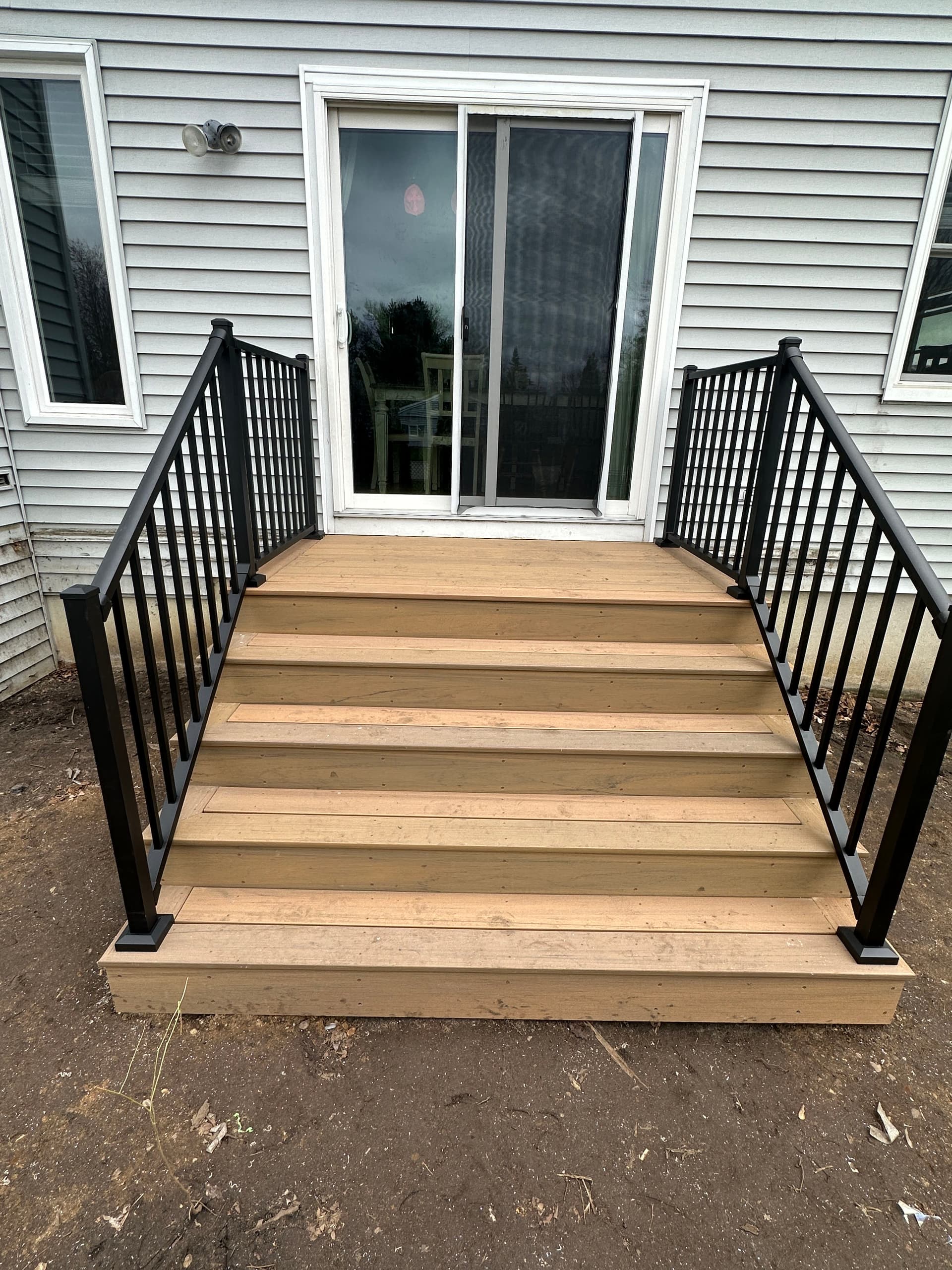
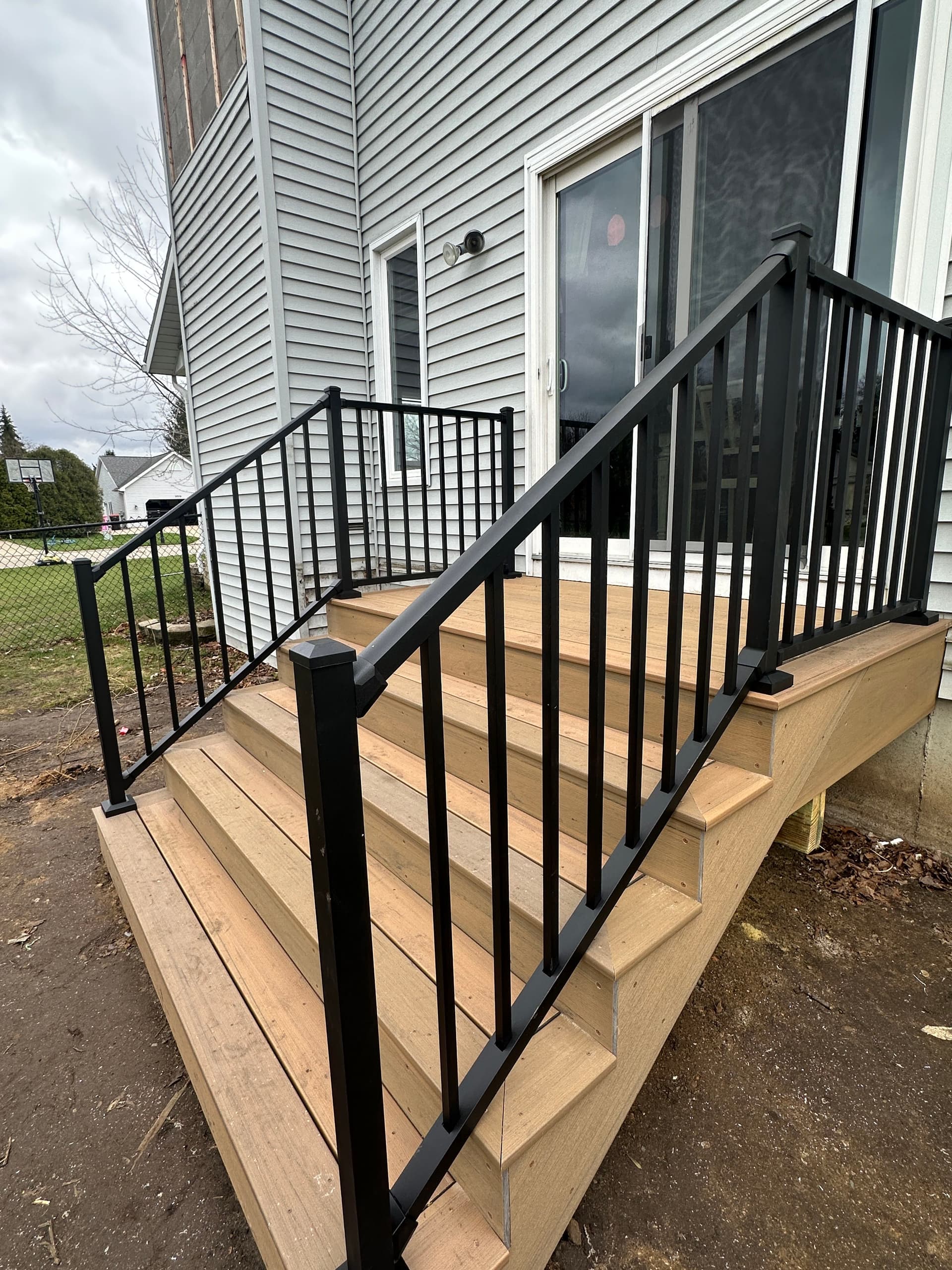
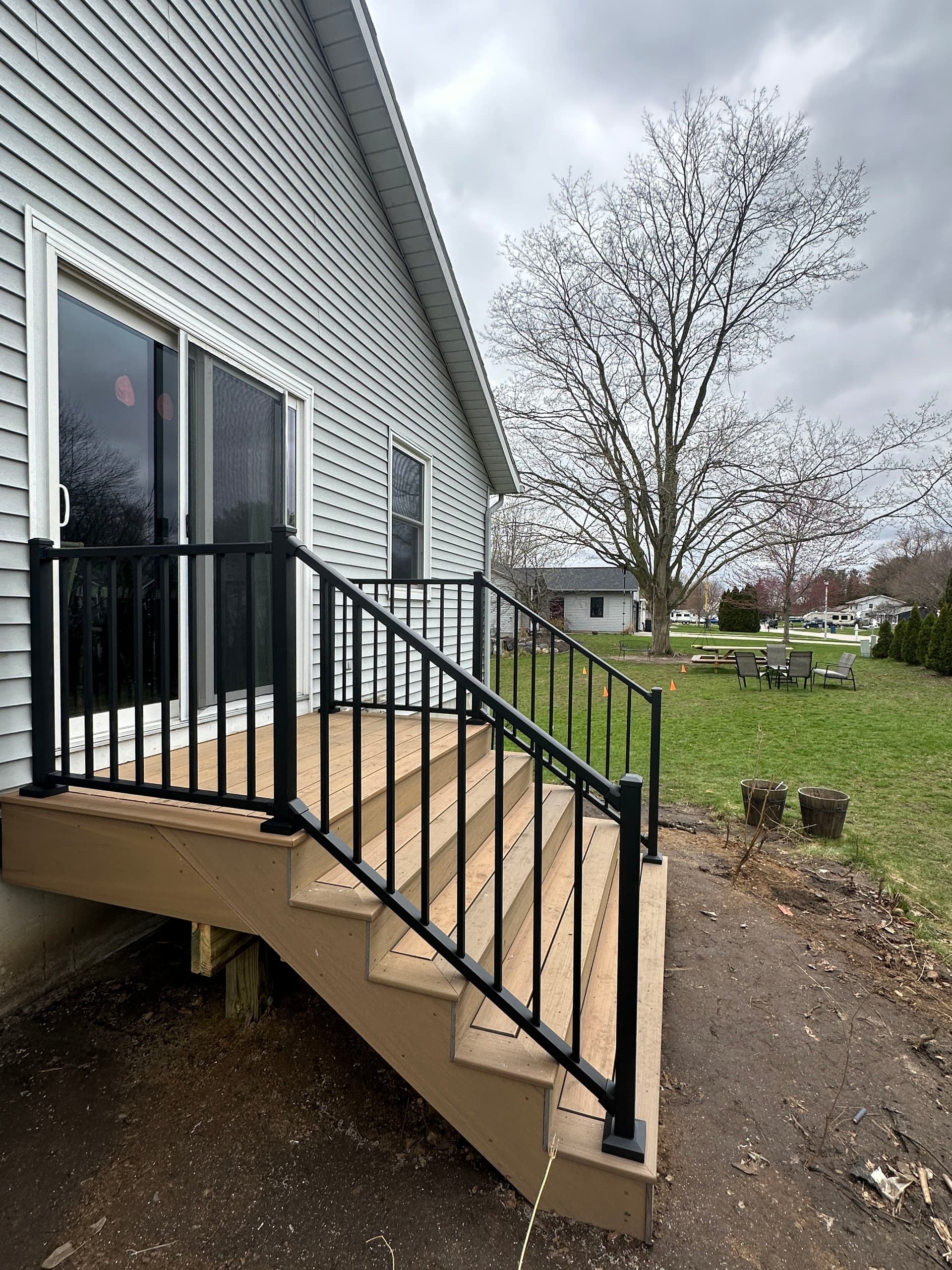
Old decks don't age gracefully. They crack, they fade, the railings get wobbly - and at some point, what was once a functional outdoor space starts feeling like a liability. That's exactly where this job started. The existing deck had run its course, and the homeowner wanted something built right this time.
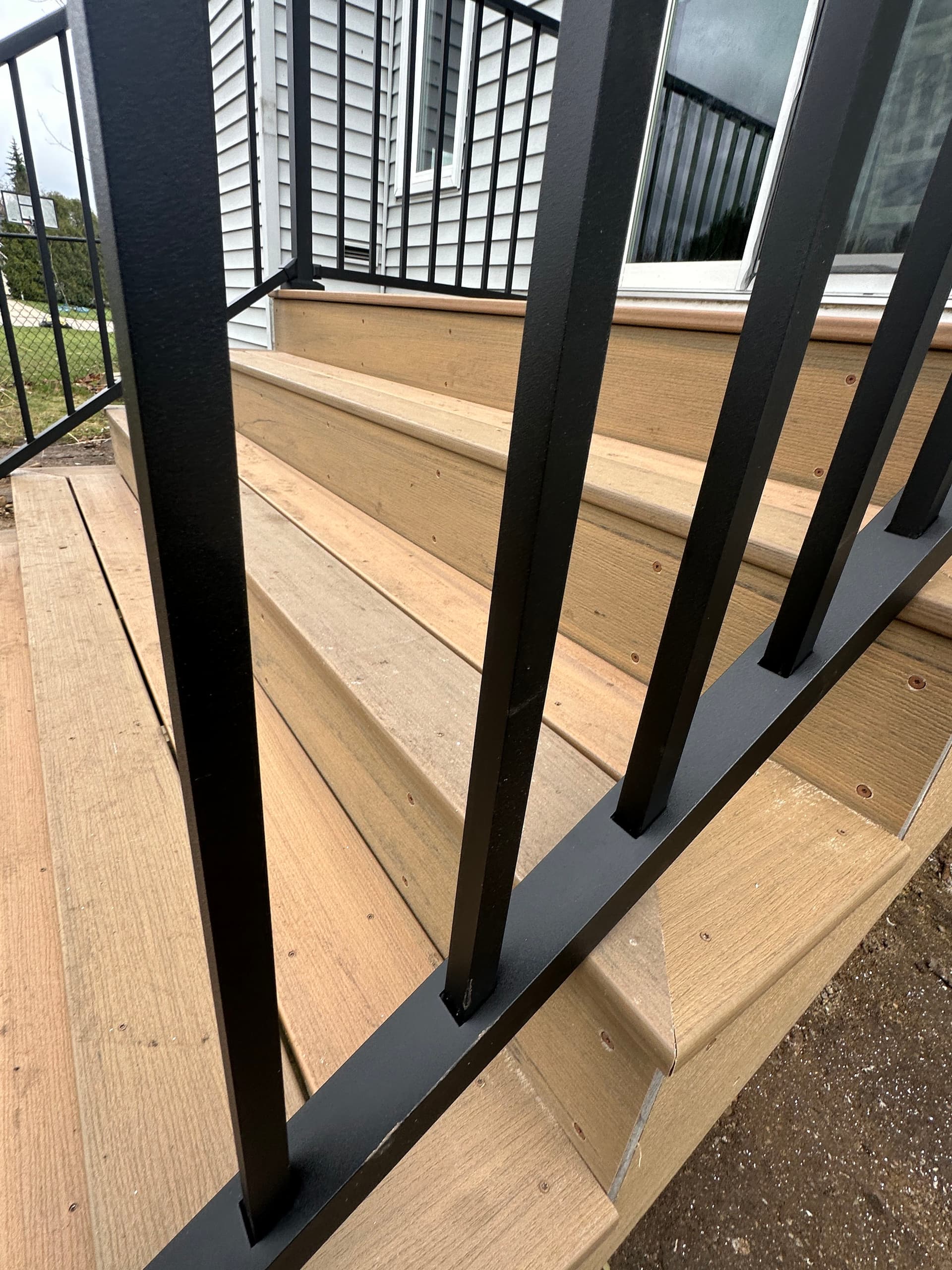
We tore out the old structure completely and came back with a TimberTech composite deck paired with Westbury aluminum railing. The combination isn't accidental. TimberTech holds up season after season without the warping, splintering, or annual staining that comes with pressure-treated wood. Westbury railing gives you that clean, powder-coated metal look that's both sturdy and sharp - no rust, no rot, no maintenance headaches down the road.
The stair section is where a lot of builds fall short. Get the rise or run slightly off and every single step feels awkward. We paid close attention to the stair layout here, making sure the spacing is consistent and the footing is solid. The Westbury rails run the full length of both stair sections, so there's a secure handhold from top to bottom. That matters, especially for families with kids or older adults coming in and out of the back door.
What we ended up with is a deck that fits the home - not just functionally, but visually. The warm tone of the TimberTech decking against the matte black Westbury railing works well against the gray siding. It's a combination that looks intentional, not like a patch job. Clean lines, no clutter, nothing that looks like it's going to need attention next spring.
When you're replacing a deck, the materials you choose upfront determine how much time and money you spend later. Composite decking and aluminum railing cost more than treated lumber at the start - but they don't ask much of you after that. That's the trade-off most homeowners are happy they made a few years down the road.